
When Courage Speaks Louder Than Fear
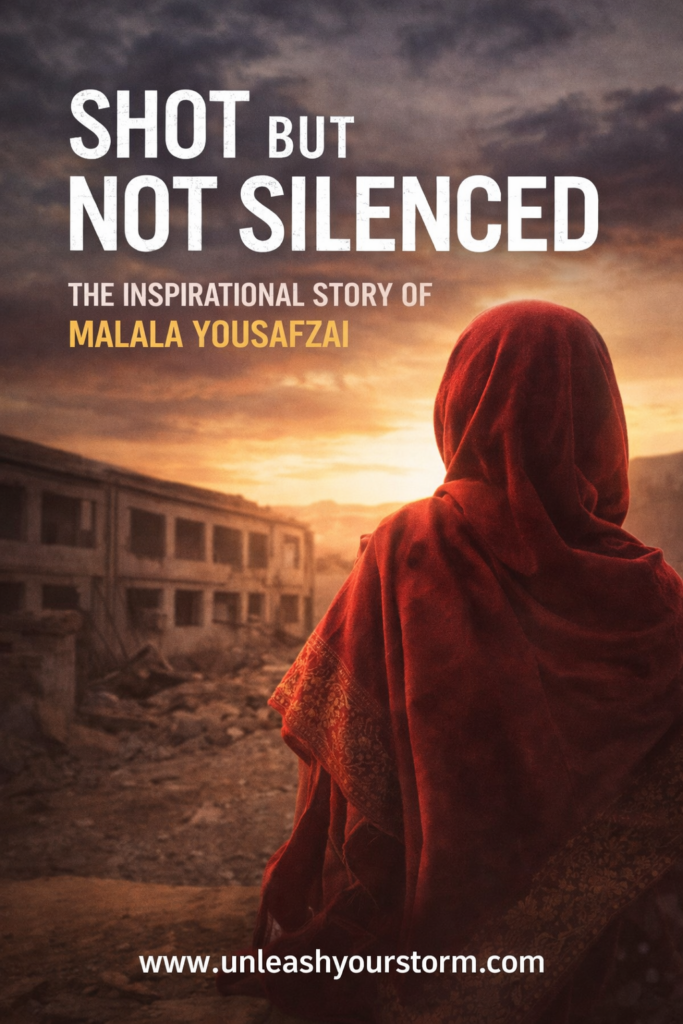
Some people inspire because they achieve success. Others inspire because they refuse to surrender when everything tells them to.
Malala Yousafzai belongs firmly in the second category.
At just 15 years old, she survived an assassination attempt meant to silence her voice. Instead of retreating into fear, she used that moment to amplify a message heard around the world: every child deserves an education.
Her story isn’t just about politics or activism. It’s about resilience, courage, and what happens when someone decides their purpose is bigger than their fear.
A Childhood Shaped by Determination
Malala grew up in Pakistan’s Swat Valley, an area once known for its natural beauty but later affected by extremist control. During her childhood, the Taliban began restricting girls’ education, closing schools and threatening families who resisted.
Many people stayed silent — understandably so.
But Malala didn’t.
Encouraged by her father, an educator who believed deeply in equality, she began speaking publicly about girls’ right to education. She even wrote anonymously for the BBC about life under Taliban rule while still a young teenager.
This wasn’t fame-seeking.
It was conviction.
And conviction often comes with risk.
The Day Everything Changed
On October 9, 2012, that risk became brutally real.
While riding home from school, Malala was shot in the head by a Taliban gunman. The message was clear: stop speaking out.
The world watched anxiously as she fought for her life.
She was airlifted to the UK for specialist treatment. Multiple surgeries followed. Recovery was long and uncertain.
For many people, surviving something like that would be reason enough to step back, seek privacy, and avoid further danger.
Malala chose the opposite.
Turning Trauma Into Purpose
Rather than being silenced, Malala’s voice grew stronger.
She began speaking internationally about education, equality, and opportunity. Her courage resonated across cultures and generations. She co-founded the Malala Fund, an organisation focused on helping girls access 12 years of safe, free, quality education worldwide.
Her message wasn’t angry or vengeful.
It was hopeful.
That’s what made it powerful.
She demonstrated that resilience isn’t just survival — it’s transformation.
Becoming the Youngest Nobel Peace Prize Winner
In 2014, at just 17 years old, Malala became the youngest Nobel Peace Prize laureate in history. The award recognised her ongoing fight for children’s rights to education globally.
This wasn’t just symbolic.
It validated the impact one voice can have when driven by purpose rather than fear.
But perhaps even more important than the award itself was what it represented:
Proof that courage can influence the world.
Why Her Story Matters Today
Malala’s journey speaks to far more than education policy.
It speaks to anyone facing:
- Fear of speaking up
- Setbacks that feel overwhelming
- Situations where staying silent seems safer
- Moments when courage feels costly
Most people won’t face threats as extreme as Malala did. But everyone encounters moments where they must choose between comfort and growth.
Her story reminds us:
Fear doesn’t have to make the final decision.
Lessons We Can Learn From Malala
1. Your Voice Matters
Even when you feel small, your perspective can create impact.
2. Courage Often Feels Uncomfortable
Doing the right thing rarely feels easy in the moment.
3. Purpose Strengthens Resilience
Knowing why you do something helps you persist through adversity.
4. Adversity Can Amplify Impact
Some setbacks become platforms for greater influence.
5. Youth Doesn’t Limit Influence
Age, background, or status don’t define potential impact.
Beyond Activism — A Human Story
It’s easy to see Malala as a symbol. But she’s also simply a person who made a brave choice repeatedly.
She continued her education, graduating from Oxford University. She remains active in advocacy while also building a personal life, career, and future.
That balance matters.
Because resilience isn’t just dramatic moments.
It’s everyday persistence.
The Unleash Your Storm Perspective
Malala’s story perfectly reflects what it means to unleash your storm:
Not suppressing fear — but moving forward despite it.
Not avoiding adversity — but transforming it into strength.
Not waiting for perfect conditions — but acting with purpose anyway.
Storms come in many forms:
- Personal doubt
- External obstacles
- Unexpected crises
- Societal pressure
What defines you isn’t the storm.
It’s how you respond to it.
Inspiration You Can Apply Today
You don’t have to start a global movement to learn from Malala’s story.
You can:
- Speak up when something matters to you
- Take action despite uncertainty
- Support others facing challenges
- Pursue education or growth opportunities
- Stand firm in your values
Small courageous actions accumulate.
Over time, they shape identity.
Final Thought: Courage Is Contagious
One of the most powerful aspects of Malala’s journey is how it inspires others. Courage spreads. When one person speaks up, others feel empowered to do the same.
That ripple effect is how change happens — not just globally, but personally.
Your courage could inspire someone else.
And their courage could inspire another.
That’s how storms turn into movements.
👉 Read the original story here
https://www.nobelprize.org/prizes/peace/2014/yousafzai/facts/
https://www.britannica.com/biography/Malala-Yousafzai