
When Life Changes in an Instant
Some storms build slowly. Others strike without warning.
For former professional rugby player Ed Jackson, life changed in seconds. A diving accident in 2017 caused catastrophic spinal injuries, leaving him paralysed from the shoulders down. Doctors warned he might never walk again.
For someone whose identity was built on athletic performance, strength, and physical ability, the impact was devastating.
But what followed wasn’t a story of limitation.
It became a story of resilience, reinvention, and refusing to let adversity define the future.
From Athlete to Patient Overnight
Before the accident, Ed lived a life many dream about. Professional rugby, travel, competition, and peak physical fitness were part of his daily reality.
Then suddenly, everything stopped.
Hospital rooms replaced stadiums. Rehabilitation replaced training sessions. Uncertainty replaced confidence.
Moments like that force difficult questions:
Who am I now?
What does the future look like?
Is recovery even possible?
Many people in similar situations understandably struggle with fear, frustration, and grief. Ed faced all of those emotions too.
But he made one crucial decision early on:
Focus on what he could control.
Small Wins Become Big Victories
Recovery from spinal injury isn’t linear. Progress can be slow, unpredictable, and mentally exhausting.
At first, even basic movement was a challenge. Lifting a limb, sitting upright, or regaining sensation became milestones worth celebrating.
Where elite sport once meant chasing trophies, success now meant tiny increments of progress.
That shift in perspective is powerful.
Because resilience often starts with recognising that small steps forward still count.
Over time, those steps compound.
And they did for Ed.
Defying Expectations
Through intensive physiotherapy, determination, and mental discipline, Ed gradually regained mobility. Eventually, he progressed from paralysis to standing, then walking again.
But here’s where his story becomes extraordinary.
Many would have considered walking again the ultimate victory.
Ed saw it as a starting point.
Rather than aiming for a return to “normal,” he began setting new challenges.
Big ones.
Climbing Mountains — Literally
Ed Jackson didn’t just recover mobility.
He became a mountaineer.
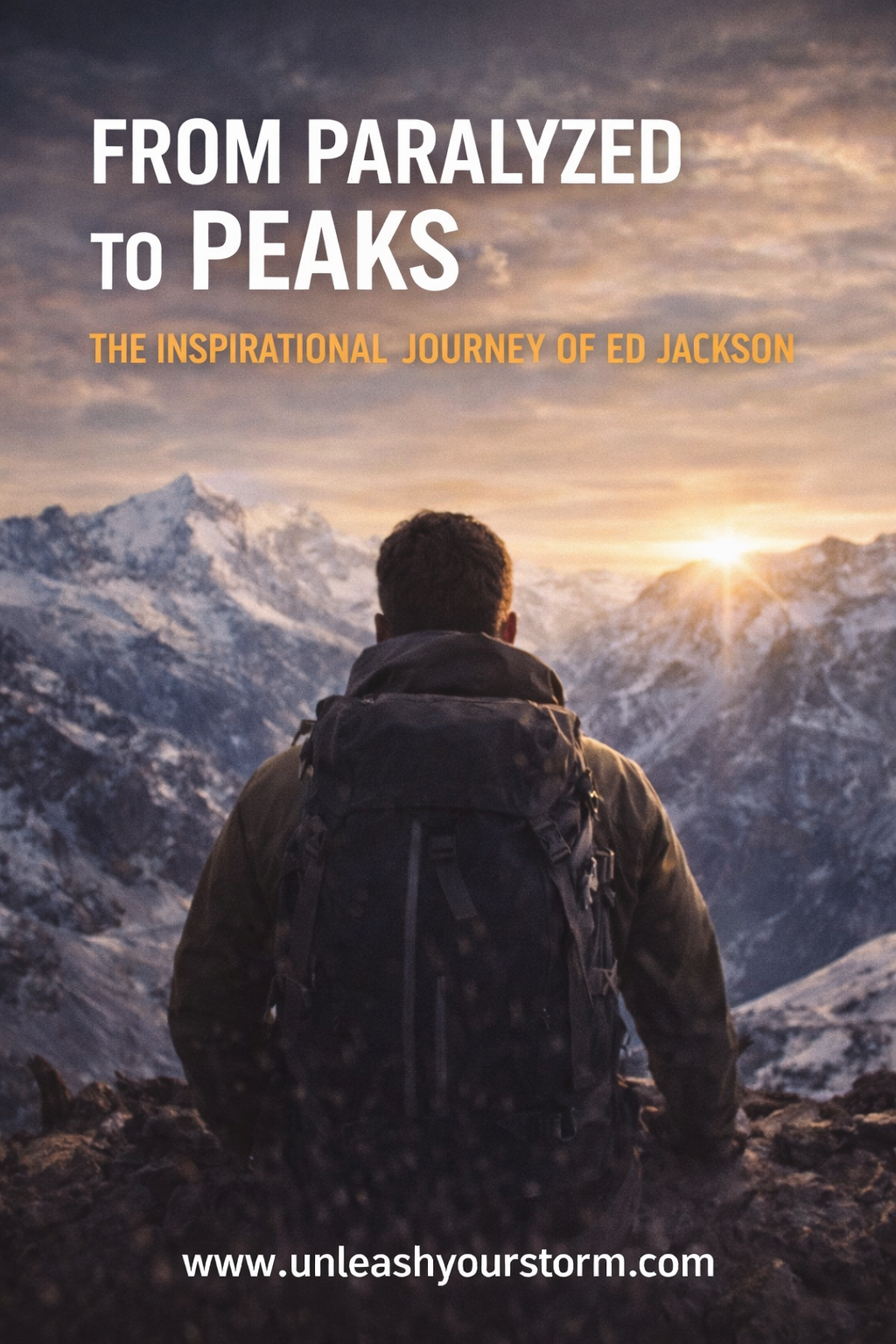
He climbed Snowdon in Wales, tackled peaks in the Alps, and even ascended Himlung Himal in Nepal — a formidable Himalayan mountain.
Think about that journey:
From paralysis to mountaintops.
From hospital bed to extreme environments.
From uncertainty to achievement.
Climbing mountains became symbolic as well as physical. Each ascent represented overcoming fear, redefining limits, and embracing life fully despite past trauma.
The Mental Strength Behind the Comeback
Physical recovery is only part of the story.
Mental resilience is the real foundation.
Ed has spoken openly about:
- Managing fear after trauma
- Building confidence gradually
- Accepting setbacks without losing motivation
- Maintaining purpose through adversity
These psychological tools apply far beyond injury recovery.
They apply to:
Career setbacks.
Financial stress.
Health challenges.
Personal struggles.
Resilience is transferable.
Turning Personal Recovery Into Collective Impact
Ed didn’t stop at personal achievement. He founded the Millimetres 2 Mountains Foundation, helping people recovering from trauma experience outdoor challenges that build confidence and wellbeing.
This shift from personal recovery to helping others reflects a common pattern among resilient individuals:
Adversity often expands empathy.
People who overcome hardship frequently become powerful supporters for others facing similar challenges.
Purpose amplifies resilience.
And resilience fuels purpose.
Why This Story Resonates
Ed Jackson’s journey connects deeply because it reflects universal human experiences:
Unexpected change.
Loss of identity.
Rebuilding confidence.
Finding new direction.
Not everyone faces paralysis.
But everyone faces storms.
And storms test:
Mindset.
Adaptability.
Persistence.
Ed’s story demonstrates that resilience isn’t about avoiding hardship — it’s about navigating through it.
Lessons From Ed Jackson’s Journey
1. Focus on What You Can Control
Energy spent on uncontrollable factors drains motivation. Control what you can influence.
2. Small Progress Matters
Tiny improvements compound into significant transformation.
3. Reinvention Is Possible
Life chapters can change dramatically — and positively.
4. Purpose Accelerates Recovery
Helping others often strengthens personal resilience.
5. Mental Strength Drives Physical Results
Mindset frequently determines outcome more than circumstance.
The Unleash Your Storm Perspective
Ed Jackson’s story perfectly embodies the Unleash Your Storm philosophy.
Storms don’t have to break you.
They can shape you.
Sometimes adversity strips away comfort zones, forcing growth that wouldn’t otherwise happen.
That growth can lead to:
New passions.
New purpose.
New perspectives.
Storms can become catalysts.
Inspiration You Can Apply Today
You don’t need to climb mountains to apply these lessons.
You can:
- Take one small step toward recovery or growth today
- Set a meaningful goal despite uncertainty
- Support someone facing adversity
- Reframe setbacks as opportunities
- Focus on progress instead of perfection
Consistency beats intensity.
Progress beats paralysis.
Action beats fear.
Final Thought: Strength Often Emerges After the Storm
Ed Jackson’s journey reminds us that life doesn’t always return to what it was before hardship.
Sometimes it becomes something stronger.
From paralysis to mountaineering.
From athlete to advocate.
From tragedy to inspiration.
Your storm might look different.
But your response can be just as powerful.
Because resilience isn’t reserved for elite athletes.
It’s a human capacity.
And often, it reveals itself exactly when you need it most.
👉 Original reporting source:
https://people.com/british-rugby-player-ed-jackson-is-climbing-mountains-after-he-was-told-hed-never-walk-again-exclusive-8696960